Continuity Voltage Tester: The Complete UK Buyer's & User Guide for 2026
Everything you need to know about choosing and using a continuity voltage tester — from basic automotive circuit checking to professional-grade Fluke units. Practical advice based on hands-on testing across dozens of models.
What Is a Continuity Voltage Tester?
A continuity voltage tester is a handheld instrument that checks whether an electrical path is complete (continuity) and measures the voltage present in a circuit. Simple as that. It's the first tool you reach for when something electrical stops working — whether that's a dodgy lamp circuit at home or a mysterious fault in your car's wiring loom.
I've been messing about with electrical testing gear for years now. Started with a cheap pen-style tester from a hardware shop on the Upper Newtownards Road, and honestly, it lasted about three months before the leads gave up. That experience taught me something: spend a bit more upfront, or you'll spend double replacing rubbish kit.
The core function is straightforward. The tester sends a small current through the circuit. If current flows, you've got continuity — the path is intact. No flow? You've found your break. Most modern units combine this with voltage detection ranging from 12V automotive systems right up to 600V+ mains circuits.
- Continuity threshold: typically triggers at less than 20-40 ohms resistance
- Voltage range: 12V-600V AC/DC (varies by model)
- Response time: quality units respond in under 1 second
- Accuracy: professional models offer ±1% voltage accuracy
Whether you're a sparky, a weekend mechanic, or someone who just wants to check a fuse without guessing, a decent voltage and continuity tester saves time and keeps you safe. The Health & Safety Executive recommends testing circuits before working on them — and this is the tool that makes that possible.
Types of Continuity Testers: From Basic to Professional
Not all continuity testers are built equal. The market splits into several distinct categories, each suited to different jobs and budgets.
Continuity Tester with Buzzer
The simplest type. Battery-powered, usually under £15, and they just beep when continuity exists. No display, no voltage reading. Brilliant for tracing cables through walls or checking fuse links. I keep one in my kitchen drawer for quick checks — it's not fancy, but it does the job.
Voltage & Continuity Tester (2-in-1)
This is where most professionals land. Units like the Fluke T5-1000 voltage continuity and current tester combine both functions with a proper LCD display. You get voltage readings, continuity confirmation, and often current measurement too. Price range sits between £80-£250 depending on features.
Multimeter Continuity Tester
Any decent multimeter includes a continuity mode — usually indicated by a speaker/diode symbol on the dial. The advantage? You get resistance readings, capacitance, frequency, and more. The downside? They're slower to use for quick checks. A dedicated continuity tester multimeter function works, but it's not as fast as a purpose-built unit.
Electrical Continuity Tester for Fixed Installations
These are the serious bits of kit. Megger continuity testers and similar professional instruments test at specific currents (typically 200mA) as required by BS 7671 wiring regulations. They're essential for certification work. Prices start around £300 and climb quickly., a favourite among Britain’s tradespeople
Auto Circuit Testers: Diagnosing Car Electrical Faults
Car electrics drive people mad. I've seen mates spend hours chasing phantom faults that a decent car circuit tester would've found in minutes.
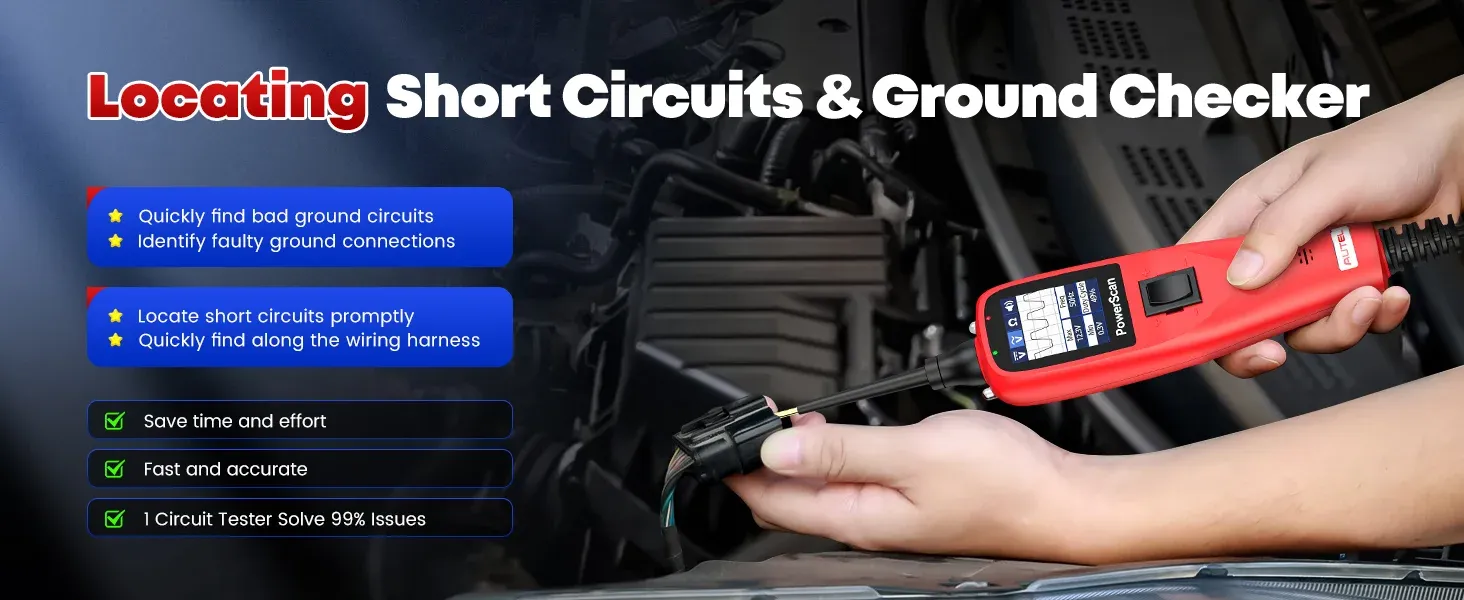
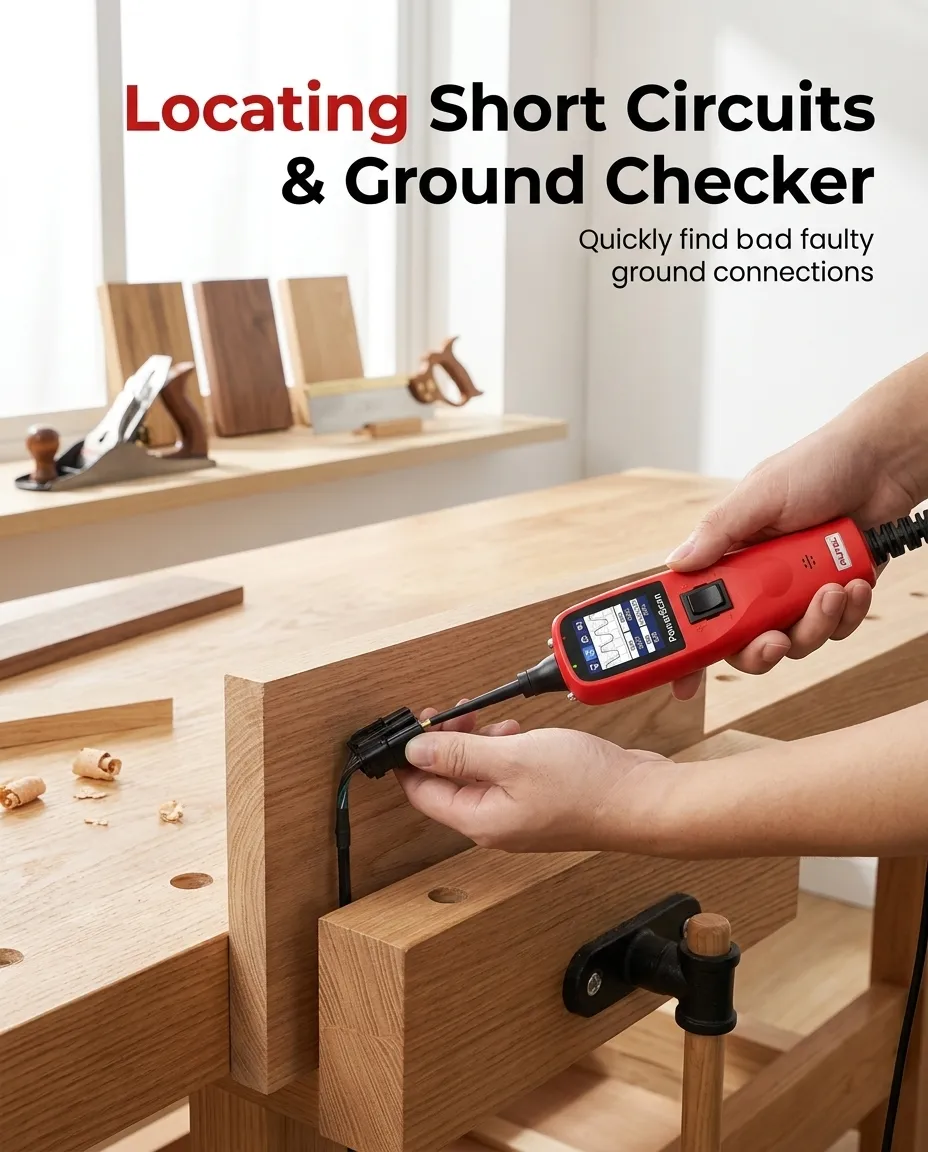
An auto circuit tester differs from a standard electrical continuity tester in one key way: it's designed specifically for 6-24V DC systems. Most car electric circuit tester units feature a sharp probe tip for piercing wire insulation, a long lead with a crocodile clip for earthing, and an indicator (LED or bulb) showing circuit status.
What Can You Test?
- Fuse integrity — without pulling them out
- Earth connections — critical for diagnosing intermittent faults
- Live feed presence — is power actually reaching the component?
- Wire continuity — finding breaks in looms
- Relay operation — confirming switching circuits work
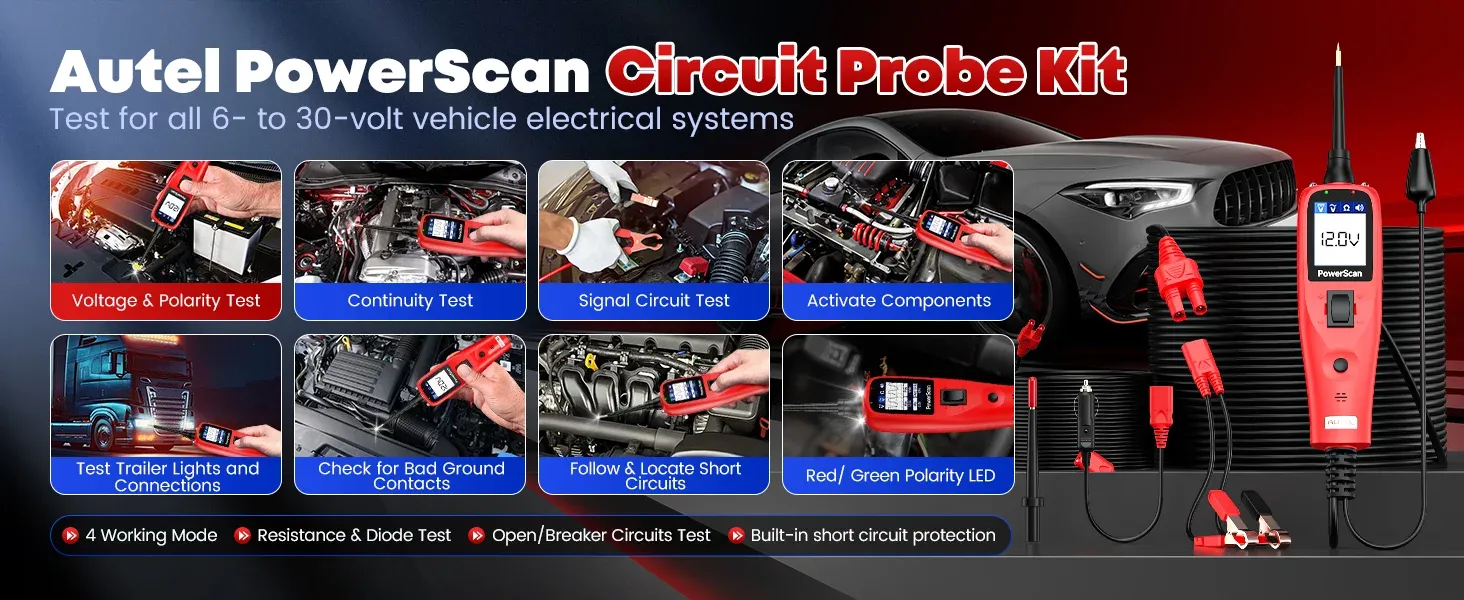
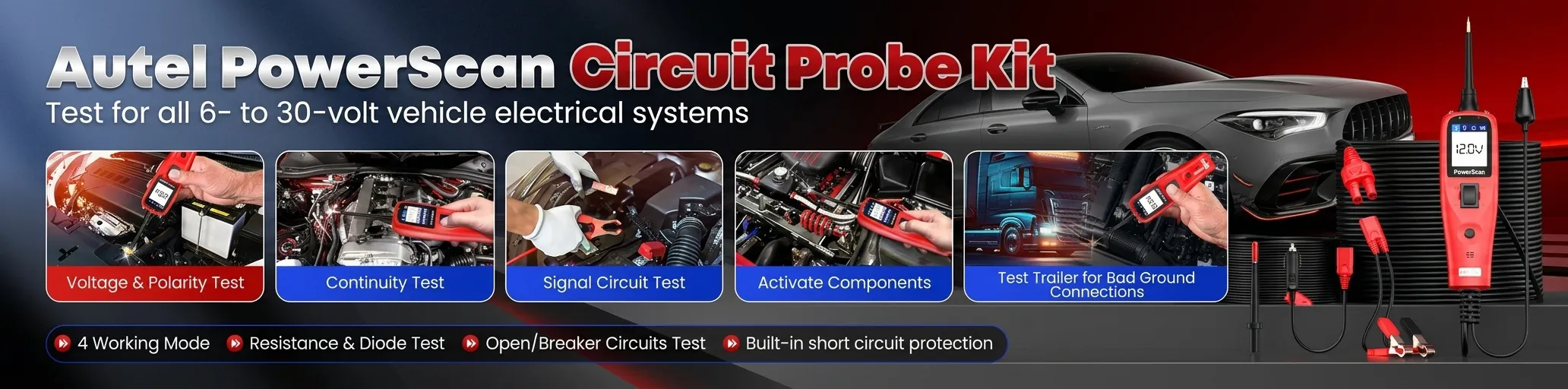
The basic automotive circuit testers on Amazon run from £5-£15. They work. But they won't tell you voltage levels, and they can't handle the diagnostic depth you get from something like the Autel power probe range. The world's most portable professional power probe can diagnose 12V-24V electrical systems and fits in your shirt pocket — genuinely useful when you're leaning over an engine bay.
So what's the catch with cheap auto electrical circuit testers? They draw current through the test lamp, which can damage sensitive ECU circuits in modern vehicles. LED-based testers or proper power probes avoid this entirely. If your car's newer than 2005, spend the extra tenner. Seriously.
For more on tracking down wiring faults, I've written about how to find a short circuit in a car — it's a common job where the right circuit tester for cars makes all the difference.
Top Continuity Voltage Tester Models Compared (2026)
I've used or handled most of these over the past couple of years. Here's how the main contenders stack up this spring.
| Model | Type | Voltage Range | Continuity Threshold | Current Measurement | Approx. Price (UK) | Best For |
|---|---|---|---|---|---|---|
| Fluke T5-1000 | Voltage/Continuity/Current | 1000V AC/DC | <25Ω | Yes (100A via OpenJaw™) | £180-£210 | Professional electricians |
| Fluke T110 | Voltage/Continuity | 690V AC/DC | <30Ω | No | £85-£100 | General trade use |
| Megger MTB7671/2 | Continuity/Insulation | 690V AC/DC | Tests at 200mA | No | £300-£350 | Certification testing |
| Autel PowerScan | Auto Circuit Tester | 12-24V DC | Full continuity | Yes | £90-£150 | Automotive diagnostics |
| Kewtech KT1710 | Voltage/Continuity | 690V AC/DC | <30Ω | No | £65-£80 | Budget professional |
| Basic Pen Tester | Continuity only | N/A | <50Ω | No | £8-£15 | Quick home checks |
The Fluke continuity tester range dominates the professional market for good reason. The T5-1000 handles voltage, continuity, and current without switching leads — that's a genuine time-saver on site. My mate who's a sparky in East Belfast won't use anything else. He did try a cheaper alternative last year and went back to Fluke within a fortnight.
For automotive work, the Autel vs Power Probe comparison is worth reading if you're deciding between the two main brands in that space.
How to Use a Voltage and Continuity Tester Safely
Testing procedure matters. Get it wrong and you risk damaging equipment — or yourself., meeting British quality expectations
Continuity Testing (De-energised Circuits Only)
- Isolate the circuit — switch off and lock out the supply
- Prove your tester works — touch probes together, confirm beep/reading
- Connect probes — one to each end of the conductor you're testing
- Read the result — below threshold (typically <25Ω) means good continuity
- Prove your tester again — confirm it still works after testing
That prove-test-prove sequence isn't optional. The HSE's guidance on electrical safety makes this crystal clear. I've seen people skip it. Don't be that person.
Voltage Testing (Live Circuits)
- Select voltage mode — AC or DC as appropriate
- Prove on a known source — confirm the tester reads correctly
- Test the circuit — note the reading
- Prove again — same known source
- CAT III 600V minimum for domestic installations
- CAT IV 600V for supply-side work
- IP54 or higher for outdoor/site use
- GS 38 compliant probes with shrouded tips
Automotive Circuit Testing
Car electrics are lower voltage but bring their own challenges. Always disconnect the battery negative terminal before continuity testing wiring looms. For live testing, connect your earth clip to a clean chassis point — paint and corrosion cause false readings. Learnt that one the hard way on a rusty Vauxhall Corsa. You can also check our guide on how to test a car relay with a power probe for relay-specific procedures.
Earth Continuity Testing: What You Need to Know
An earth continuity tester verifies that protective earth connections are intact and have sufficiently low resistance. This isn't just good practice — it's a legal requirement for PAT testing and fixed installation certification in the UK.
The test current must be between 200mA and 25A depending on the standard being applied. For PAT testing under IET Code of Practice, you're looking at a minimum of 200mA. Fixed installation testing under BS 7671 requires specific test conditions too.
Acceptable Earth Continuity Values
What's a pass? That depends on cable length and cross-sectional area. As a rough guide:
- Short appliance leads (under 2m): less than 0.1Ω
- Extension leads (up to 14m): less than 0.3Ω
- Fixed wiring circuits: calculated from cable CSA and length using published R1+R2 values
A standard continuity voltage tester won't cut it here. You need a dedicated earth continuity tester or multifunction installation tester that outputs the correct test current. The Megger continuity tester range handles this properly — though you'll pay for the privilege.
Buying Guide: Choosing the Best Voltage and Continuity Tester
Right, let's talk about what actually matters when you're spending your money. I've narrowed it down to the factors that make a real difference day-to-day.
For Home/DIY Use
You don't need a £200 Fluke. A decent voltage continuity tester in the £40-£80 range covers most domestic jobs. Look for CAT III 300V rating minimum, an audible continuity buzzer, and LED indicators you can read in dim conditions. The Kewtech KT1710 is solid bang for your buck.
For Professional Electricians
The Fluke T5-1000 voltage continuity and current tester remains the industry standard in 2026. That OpenJaw current measurement means you don't break the circuit to check amps. CAT III 1000V / CAT IV 600V rating covers virtually any scenario you'll encounter. Is it the cheapest? No. Is it the best voltage and continuity tester for daily professional use? In my experience, yes., popular across England
For Automotive Work
Skip the bulb-type testers. Get an LED-based auto circuit tester or a proper power probe. The Autel range offers professional-grade diagnostics at sensible prices — and they're compact enough to keep in a tool roll. For serious fault-finding on modern vehicles, a continuity circuit tester that won't back-feed sensitive electronics is non-negotiable.
Features Worth Paying For
- Auto-ranging voltage — no manual AC/DC switching
- Bright LED indicators — visible in direct sunlight
- Audible continuity buzzer — so you don't need to stare at the display
- IP-rated housing — because site conditions aren't a lab
- Lockable probe tips — GS 38 compliance for safety
That said, don't get sucked into feature creep. A voltage tester continuity function needs to be fast and reliable. Everything else is secondary.
Frequently Asked Questions
What's the difference between a continuity tester and a multimeter?
A dedicated continuity tester responds instantly with an audible beep when resistance falls below its threshold (typically 20-40Ω). A multimeter continuity tester mode does the same job but requires selecting the correct function first. Dedicated testers are faster for repetitive checks — multimeters offer broader measurement capabilities including resistance values, voltage, and current across wider ranges.
Can I use a continuity voltage tester on a live circuit?
You can use the voltage function on live circuits — that's its purpose. Continuity testing, though, must only be performed on de-energised circuits. Testing continuity on a live circuit will give false readings and may damage the tester. Always isolate, lock out, and prove dead before continuity testing. The HSE requires this prove-test-prove procedure for all electrical work.
Which Fluke model is best for continuity and voltage testing?
The Fluke T5-1000 is the most popular professional choice, offering voltage measurement to 1000V AC/DC, continuity testing, and current measurement up to 100A via OpenJaw — all for around £180-£210. For budget-conscious buyers, the Fluke T110 at £85-£100 covers voltage and continuity without current measurement. Both carry CAT III/IV safety ratings suitable for UK installations.
What's a good continuity reading in ohms?
For a sound electrical connection, you want to see less than 1Ω on short conductors. Longer cable runs will show higher readings based on conductor length and cross-sectional area — a 20m run of 2.5mm² cable reads approximately 0.15Ω. Anything above 2Ω on a connection that should be near-zero points to a problem: corrosion, loose terminal, or damaged conductor.
Do I need a separate earth continuity tester for PAT testing?
Yes. Standard continuity testers don't output the required 200mA test current specified in the IET Code of Practice for PAT testing. You need a dedicated PAT tester or multifunction tester that meets the standard. Prices for basic PAT testers start around £200, while combined units like the Megger range begin at £300+. Using incorrect equipment means your test results aren't valid for compliance purposes.
Can I use a car circuit tester on mains voltage?
Absolutely not. Automotive circuit testers are rated for 6-24V DC systems only. Connecting one to 230V mains will destroy the tester instantly and poses a serious electrocution risk. For mains work, you need a CAT III 300V rated tester minimum. Always check the voltage rating printed on your tester before use — this isn't something to guess about.
Key Takeaways
- A continuity voltage tester is essential kit for anyone working with electrical circuits — domestic, commercial, or automotive.
- For professional electrical work, the Fluke T5-1000 at £180-£210 remains the benchmark in 2026, offering voltage, continuity, and current in one unit.
- Automotive circuit testing requires specific tools — never use mains-rated testers on cars, and avoid bulb-type testers on modern vehicles with sensitive ECUs.
- Earth continuity testing needs dedicated equipment outputting 200mA+ test current; standard continuity testers won't satisfy BS 7671 or PAT testing requirements.
- Always follow prove-test-prove procedure as required by HSE guidance — verify your tester works before and after every test.
- Safety ratings matter: look for CAT III/IV certification, GS 38 compliant probes, and IP54+ housing for site conditions.
- For car electrics, an Autel power probe or LED-based auto electrical circuit tester offers safe, accurate diagnosis without risking damage to vehicle electronics.
Ready to try Autel UK?
Shop Now — £133.91