How to Test a Car Relay with a Circuit Tester
Short answer: to test a car relay, find it, identify its four (or five) terminals, then use a circuit tester to confirm the relay is getting power and switching correctly. It is a quick check that often saves buying parts you do not need — a dead fuel pump or dead lights can be a GBP 5 relay rather than the expensive component itself.
Relays are one of the most satisfying DIY checks because they are cheap, common and easy to test once you know the terminals. This guide keeps it practical.
Find the relay
Most relays live in the engine-bay fuse box or an interior fuse panel. The lid diagram or the owner’s manual identifies which relay controls what — fuel pump, headlights, horn, cooling fan and so on. Pull the suspect relay to inspect and test it.
Understand the terminals
A standard 4-pin automotive relay has two circuits:
- The control (coil) side: a small current energises an electromagnet.
- The switched (load) side: the electromagnet closes a heavier contact to power the component.
A 5-pin relay adds a normally-closed contact. The terminal numbers (such as 85, 86, 30 and 87) are usually moulded into the case.
Test it with a circuit tester
Is the relay getting power?
With the relay in place and the circuit activated, use the tester to confirm voltage reaches the coil terminals and the feed terminal. No power to the relay points to a fuse or wiring fault upstream — see the car electrical tester guide.
Is it switching?
When the coil is energised you should hear a click and see the switched output go live on the tester. Continuity checks across the contacts (relay out of circuit) confirm whether it opens and closes as it should. The PowerScan PS100’s voltage and continuity modes cover both halves of this in one tool.
Before your MOT or a parts order
A failed relay can masquerade as a much bigger problem. Confirming it before an MOT retest, or before ordering a pump or motor, is exactly the kind of five-minute check that keeps costs down. If you are new to the tool, start with how to use a power probe.
Safety notes
Work on conventional 12V and 24V circuits only, keep clear of high-voltage hybrid and EV systems, and use the high-impedance mode around anything ECU-controlled. A 10A thermal-trip breaker adds protection during live checks.
Testing a relay with the PowerScan PS100
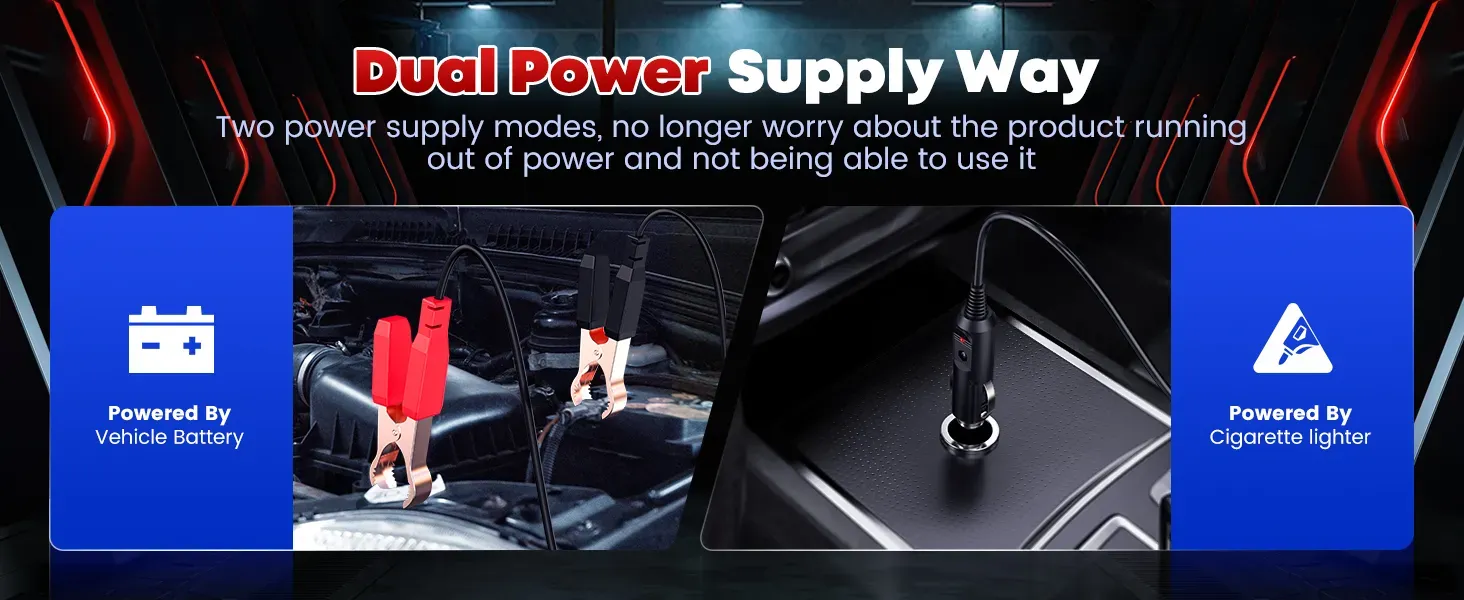
The Autel PowerScan PS100 is a 30 g circuit tester that covers both halves of a relay test: voltage (0 to 65V) to confirm the coil and feed are powered, and continuity (to 200 kOhm) to check the contacts. It shows results on a TFT colour display, has an integrated LED work light and a 10A thermal-trip breaker, works on 12V and 24V systems, and ships with a 6-metre lead. It runs off the vehicle battery and has a high-impedance mode for ECU-sensitive lines. It is GBP 212.49 inc. VAT with Free UK Delivery, 30-day returns and a 12-month warranty plus UK support, rated 4.8 out of 5 from 300 reviews.
Confirm the relay before you buy the expensive part
View the Autel PowerScan PS100 — £212.49Frequently asked questions
How do you test a car relay?
Find the relay using the fuse-box diagram, identify its coil and switched terminals, then use a circuit tester to confirm the coil gets power and the relay switches its output. Continuity checks across the contacts, with the relay out of circuit, confirm it opens and closes.
What are the terminals on a 4-pin relay?
A 4-pin relay has a control (coil) side, where a small current energises an electromagnet, and a switched (load) side, where the electromagnet closes a heavier contact. The terminal numbers such as 85, 86, 30 and 87 are usually moulded into the case.
Can I test a relay without removing it?
You can confirm whether it is getting power and switching in place by checking voltage at the terminals with the circuit activated. To check the contacts by continuity, remove the relay so it is out of circuit.
Why test a relay before replacing parts?
A failed relay can mimic a dead pump, motor or lighting circuit. A quick relay test can save buying an expensive component, and confirms the fault before an MOT retest or a parts order.
Ready to try Auteltester UK?
Shop Now — £212.49